The Continuum of Learner Engagement
Developing a richer language for engagement
Expanding our thinking and providing greater clarity about engagement
We have been concerned with engagement in our schools for decades, and that concern is greater now than it has ever been. Despite all the attention and effort we have put into improving engagement, we don't appear to be getting anywhere.
When I ask people what they mean by engagement, it is clear that we mean lots of different things. Involved, interested, excited, active, curious, focused, paying attention and participating are just some of the words people share. And yet, in many schools, the language of engagement is often limited to two words – engaged and disengaged.
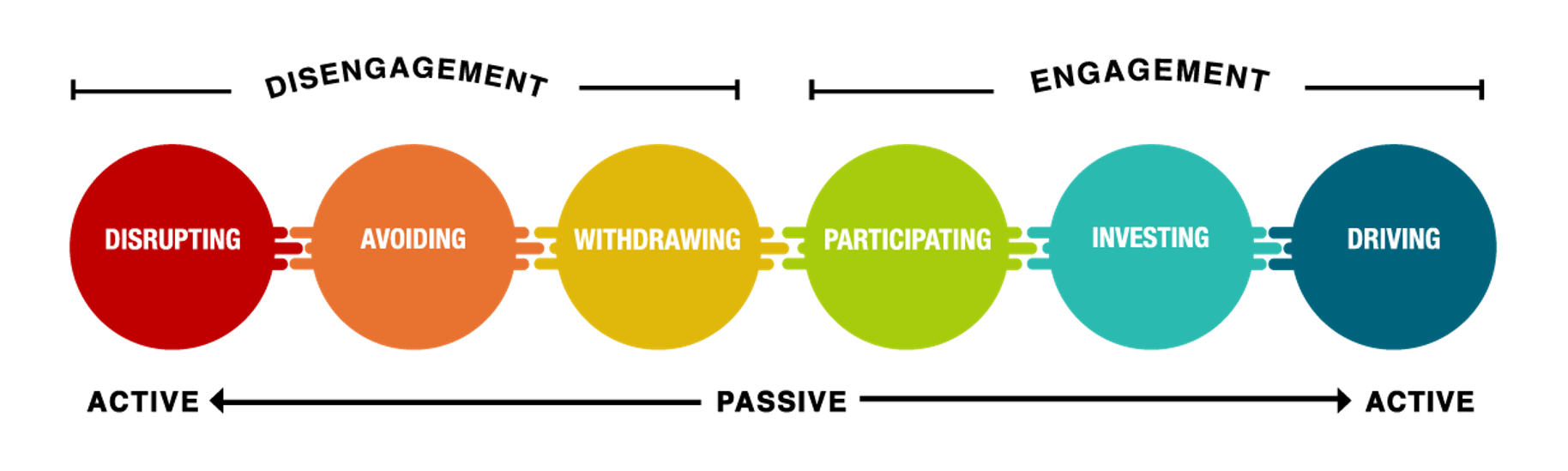
In 2016-17, I began investigating teacher perspectives on engagement, with the hope that greater clarity of the concept would help us be more successful in improving engagement within our schools. The result of that study was the Continuum of Learner Engagement. It represents the range of different forms of engagement and disengagement that teachers described based on their experiences in the classroom.
The Continuum of Learner Engagement
Disengagement
Disengagement can range from more active forms of Disrupting and Avoiding to the more passive form of Withdrawing.

Disrupting
Trying to cause a disruption to the learning environment.
Avoiding
Trying to avoid doing the work of learning.

Withdrawing
Trying to “fly under the radar” and go unnoticed.
Passive disengagement is just as detrimental to learning and wellbeing as more active forms of disengaging.
IMPORTANT: Passive disengagement is concerning because it is often a blind spot for teachers and therefore the student does not attract the support and attention they may need to help them get engaged in learning. Students who choose to passively disengage do just as poorly on average as those who are more actively disengaged.
Engagement
Engagement can range from passive Participating to more active forms of Investing and Driving.
Participating
Following someone else's lead and participating in a learning activity or experience.

Investing
Feeling motivated to invest my energy and effort because I want to know more or improve.
Driving
Having a goal that I want to achieve and a plan for how I'm going to achieve it.
Effective Drivers know how to successfully manage their engagement and drive their learning.
Effective and successful Drivers know how and when to move between the different forms of engagement to help themselves learn. They also know what to do when they are feeling disengaged.